Behind the scenes

Experience, Change, and the Future: Paul Steinvorth on a coffee chat with Emilio Rolando Medina Sagastume

Behind the scenes

Experience, Change, and the Future: Paul Steinvorth on a coffee chat with Emilio Rolando Medina Sagastume

NAME
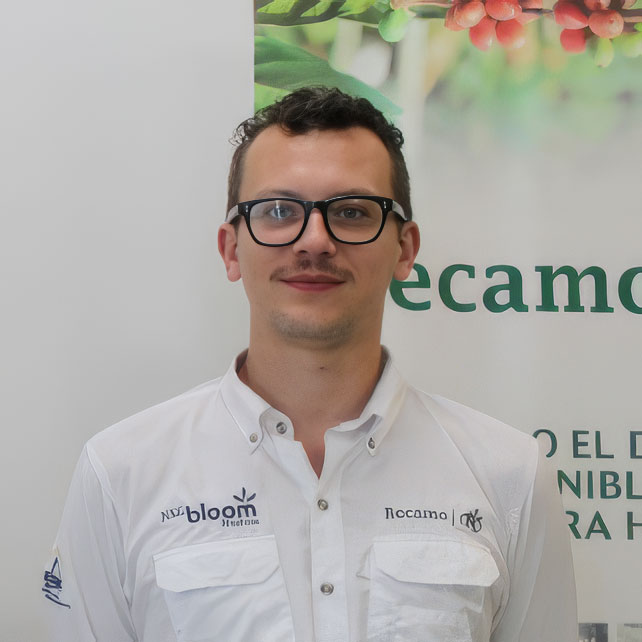
Paul Steinvorth

COMPANY
Tropical Farm Management and InterAmerican Coffee Switzerland

POSITION
Trader

DATE OF BIRTH
July 17

DATE OF FIRST DAY AT NKG
September 3, 2018

WHAT DO YOU LIKE BEST ABOUT WORKING AT NKG?
Coffee and people, both so diverse, so nuanced, it’s a never-ending fascination for me.

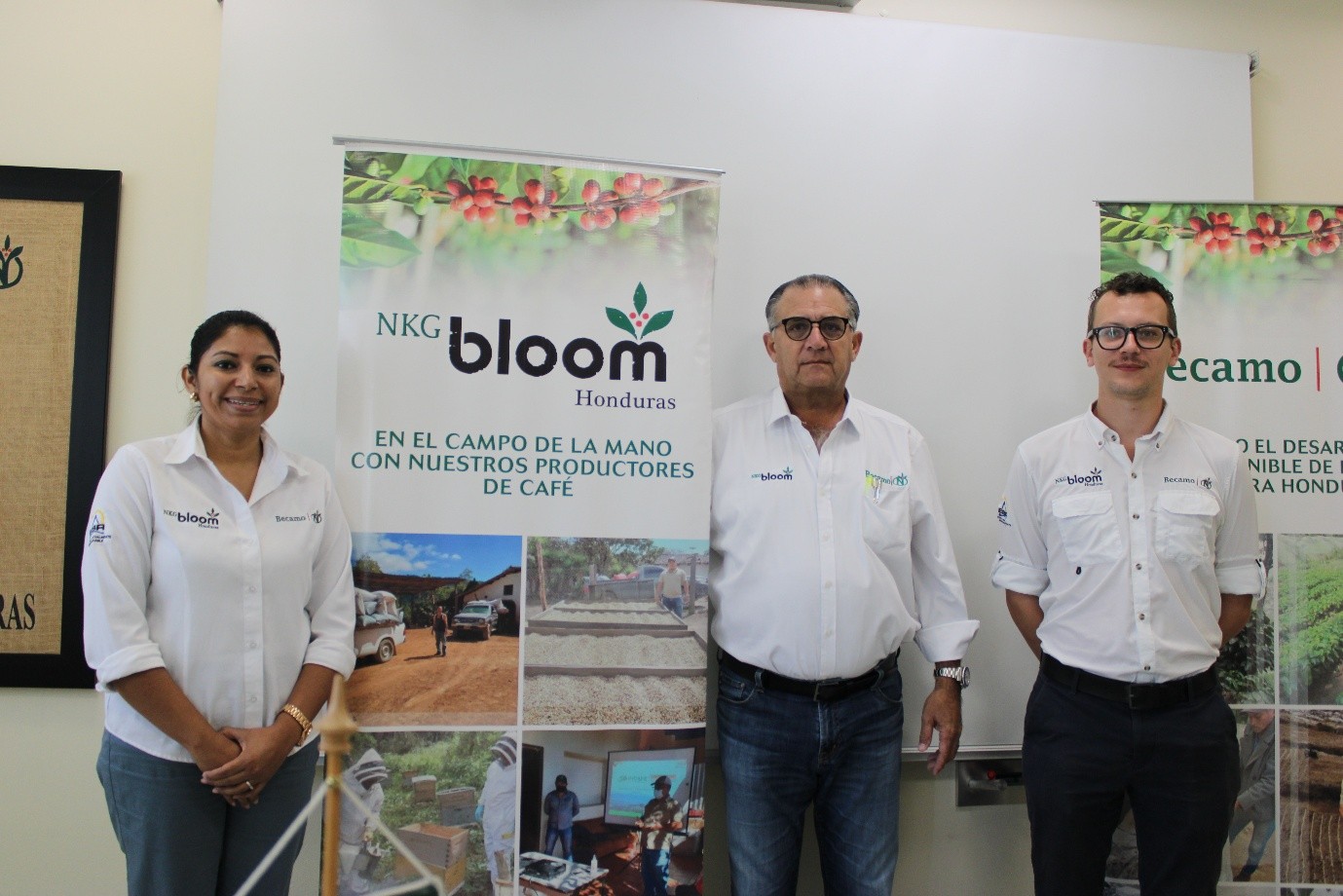
Beneficio de Café Montecristo (BECAMO) experienced rapid growth within its company history. Few people represent this journey as clearly as Emilio Rolando Medina Sagastume, General Manager. He has been there from the very beginning even before NKG became active in the country, witnessing the company’s rise to a production capacity of around one million bags per year.

Between December 2021 and September 2023, I was part of the development on the ground in Honduras during two harvests. As my direct supervisor at the time, I experienced him as clear, decisive, and strongly solution oriented. This mindset is also reflected in BECAMO’s work: pragmatic, flexible, and ready to act when change is needed.

In this conversation, Emilio shares his perspective on the journey: from the early days to today’s scale-up and the key moments and decisions along the way.

Interview

Paul Steinvorth
What changes have you seen in the global coffee industry during your time in the coffee business? 

Emilio Medina
First, I would like to thank you for the opportunity for the space to express my wonderful experience within the coffee industry and how exciting coffee is.

As you may know, BECAMO started as an exporter in 1987. Coincidentally, the changes we have been through since are big. Coffee was highly regulated; business was tied by the famous quotas. Obviously, stability and volatility of coffee was, very, super different. Volatility was much lower.

Now the market is completely free, highly volatile, prices are managed by futures, by climate, events, wars, etc. New big players in the scene, Vietnam for example and the expansion of Brazilian production brought changes to the global supply. More competition and even over supply. Very much volatility emerged. Culture also changed, in ‘87 no one talked about premium coffee, specialty coffee, microlots, there were little to no preferences for specific origins, and no one knew the word traceability. For me it was a continuous learning throughout the years.

Now we have so many more requirements. The demands for quality, sustainability, certifications, new import requirements together with climate change, all new challenges to the business. Changes have been dramatic.

Paul Steinvorth
What are the biggest challenges currently facing the coffee industry in Honduras?

Emilio Medina
Erratic rain patterns, both too much or too little rain and at wrong times that affect the coffee trees. This breaks the flowering cycles and rain and cold during the harvest affects the flow of coffee.

Temperature and humidity swing in the shortest time affect production but also the quality. The current state of war in the world has skyrocketed the prices of agrochemicals and fertilizers. Inflation and harvesting costs (costs for handpicking) have increased, and mass migration has affected the local work force availability, which led to a dependency of workers from neighboring countries. Furthermore, the aging of farmers, well, the increasing age average of the farmers, because there has existed too little motivation for the youth to work and carry on with the coffee farms.

And last but not less important, the EUDR regulation, which implies new and high costs for work that needs to be done but puts continuous pressure on us.

Paul Steinvorth
How would you describe the cooperation between exporters in Honduras and importers (worldwide) today? What works particularly well, and where do you see room for improvement?

Emilio Medina
Throughout the years, BECAMO has built strong relationships and that is important. The reliability for contract fulfillment, the shared trust. In general Honduras is viewed as trustworthy and proactive.

What could be better? As BECAMO we reacted early to EUDR requirements and challenges, and that is important, since in my consideration, the government should have gotten involved right away and board the topic, which has not been optimal.

Furthermore, unfortunately, relationships are price driven; there is no well-established strategy. There should be long-term supply contracts in place, a more solid relationship. We could strengthen the relationship with importers with joint investment in projects, and a more balanced effort. Importers require certifications, traceability, qualities, etc., but there is not a clear quality incentive structure. There is overall room to improve.

Paul Steinvorth
How have buyers’ expectations changed in recent years – particularly regarding traceability, delivery reliability, and contract security?

Emilio Medina
There was some delivery delay tolerance before, if the price was right, there were no penalties for delays caused by a mayor force. It was business, simpler.

Nowadays, clients require information and traceability from plot to the container, it is not enough now with pdfs and excels, or factsheets. And the requirement is to have immediate response. Also, nowadays we have many more clauses in the contracts, for quality, for rights of rejection, for penalties. It became much stricter, or constricting.  

Paul Steinvorth
Which achievement or accomplishment related to BECAMO are you particularly proud of?

Emilio Medina
I would say the trust built is the first among many achievements to be proud of. To have built a socially responsible company, year after year receiving the RSE seal. That is not something that happens within 1 week, there is a lot of work into it.  

We have achieved a stable and great place to work, which is reflected in our workforce, with employees over many decades, or even from day one still at BECAMO.

And finally, the correct decision after only four months, to become partners with Michael Neumann, which since, has taught me greatly, it is my “PhD”.

Paul Steinvorth
What are the key characteristics a trader should have?

Emilio Medina
That you have passion, to have passion in everything you do.

To have discipline. To be responsible. To be proactive. To be creative. To be organized.

Paul Steinvorth
Honduras does not allow Robusta production, is this a missed opportunity?

Emilio Medina

Shortly put, a clear and radical YES!

Honduras has the land, the people, and we should tap on that opportunity as the lower altitudes have faced challenges with climate change, rust and more. We cannot keep the taboo that people are going to mix robusta with the arabica. That is simply not the case.

Furthermore, Robusta and Arabica are two different “animals” and because of this, there is no competition for the same area, the producers are different, the type of soil, the altitudes. Robusta production would not only bring opportunities for the Honduran families, but also revenue for the country.

Leave a Reply

Your email address will not be published. Required fields are marked *

Further Articles

Coffee on the Move: Facts in a Nutshell

Coffee travels a long way before it reaches Europe. From harvest to arrival, Arabica coffee spends up to 90 days on the move — mostly at sea, across continents and ports. Explore the key facts and timelines behind one of the world’s most traded commodities.
Read More »

Three by Three Questions: The many steps and challenges behind a single coffee trade

While “a coffee trade” may sound straightforward, it actually involves complex processes, numerous participants, and unique challenges. In this episode of our ‘Three Times Three Questions’ series, we interview key professionals from the import, logistics, and export sectors. Through their insights and real-life stories, we uncover how their contributions keep the coffee business running smoothly and highlight examples of overcoming obstacles through collaboration and teamwork.

Read More »

Quiz: Trade & Transport Challenge

In keeping with the MAG theme, we present the ‘Trade & Transport Challenge’. Do you know the most important wordings and definitions? The quiz probably won’t be much of a challenge for our trade professionals, but it’s still nice to get full marks, isn’t it?

Read More »