Behind the scenes

On a Coffee Auction with Jad Belmezouar

Behind the scenes

On a Coffee Auction with Jad Belmezouar

In East Africa, there is a very special system for selling coffee: the coffee auction. It’s a fast-paced, transparent process where every lot finds its true value. We spoke with Jad Belmezouar, who shares his insights into the heart of coffee bidding in Kenya and Tanzania—and shows what makes this system so unique.

Understanding the Auction Process

What exactly happens at a coffee auction? Could you walk us through the process?

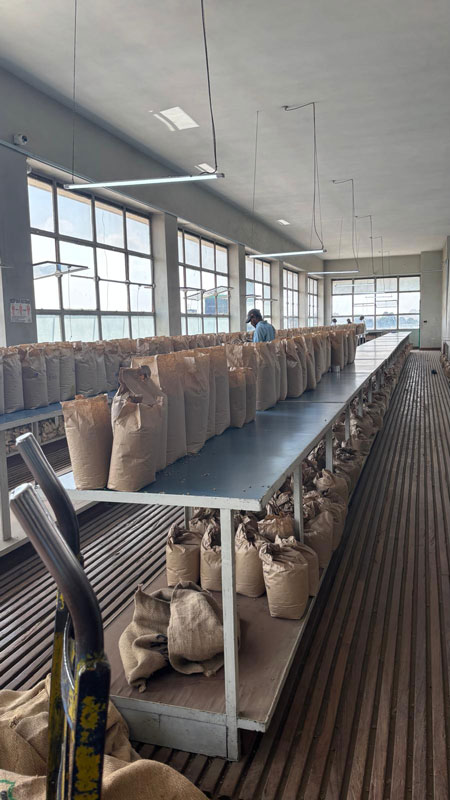
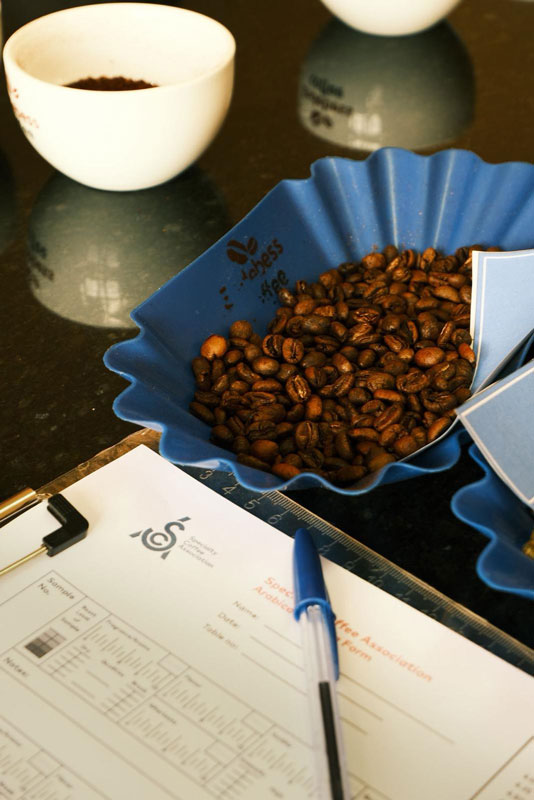
About a week before the auction, we receive the samples for every lot, each one marked with details about the cooperative, factory or washing station, along with its unique outturn number. We cup them all carefully, evaluate the green coffee, and compile our impressions into a catalogue so we know exactly what to expect.

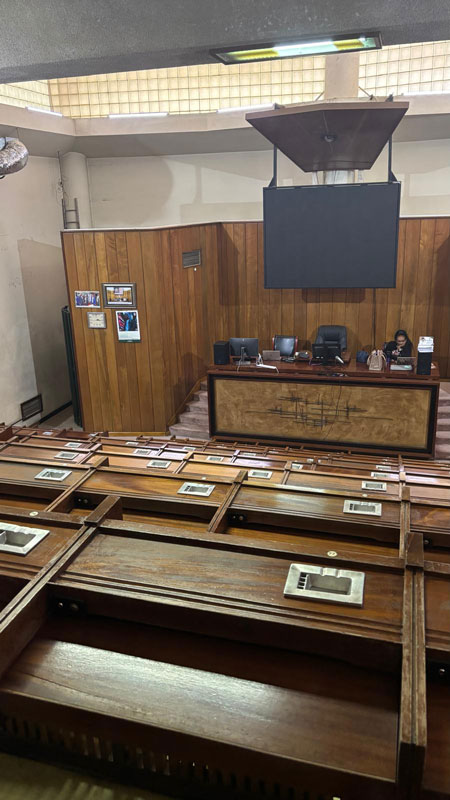
Then comes Tuesday—auction day. It begins in the morning and carries on until the very last lot is sold. Some weeks the pace is quick, and we’re done by early afternoon; other times the bidding is so active that it stretches up until evening.

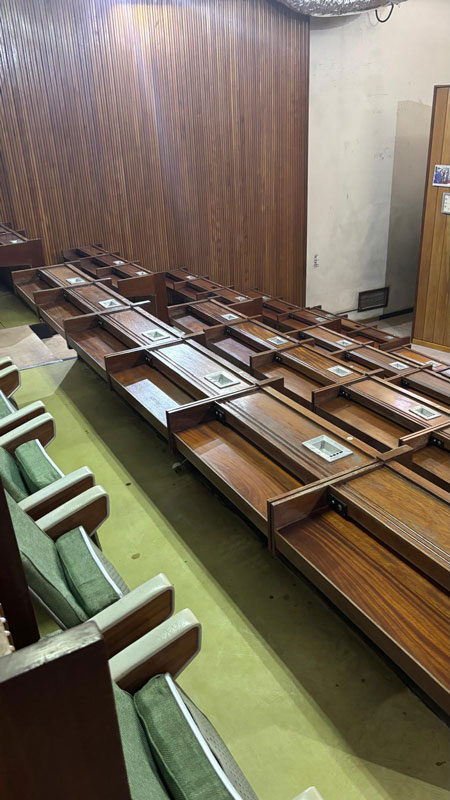
Each lot, whether it’s a single bag or a batch of 150, appears on the online platform with a price clock. As long as at least two buyers keep bidding, the clock continues to climb. When there’s only one bidder left, the clock stops signaling the moment the lot is won.

Why is this form of trading so unique or special? What makes it different from other ways of selling coffee?

This form of trading is unique because it offers one of the clearest and fairest ways to establish a true market price. Every buyer has access to the same information at the same time, and they all compete openly for each lot. For the seller—and ultimately the farmer—this creates a kind of real-time tender for every single lot of coffee, ensuring that the price reflects genuine demand. It’s a level of transparency and competitiveness that’s hard to replicate in other selling methods, and it often results in the farmer receiving the best possible price for their coffee.

What are the key differences between the auction systems in Kenya and Tanzania?

One of the biggest differences lies in how much coffee actually goes through the auction. In Kenya, since the regulatory changes, nearly all the coffee—around 95%—is sold through the auction system. Tanzania, on the other hand, has a much more mixed approach, with a smaller proportion of its production going through auction and more coffee being sold through direct channels or alternative marketing systems.

Personal Experience

What was your first impression when you attended a coffee auction for the first time? What surprised or impressed you most?

My first impression was how every lot received the exact same amount of attention and time. I was also impressed by how efficient the whole system was in terms of price discovery; you could really see the market reacting in real time.

Another thing that struck me was how different buyers behaved. Each one came in with their own needs and priorities, so you’d see completely different bidding patterns depending on who was interested in a particular lot.

How did you feel personally, experiencing this kind of trading environment?

Personally, being in that environment made me feel fully immersed in the trading model—right at the heart of how value is created and determined. It also gave me a strong sense of connection to Kenyan coffee growers, seeing firsthand how their efforts and decisions are reflected in the market and how each lot of coffee finds its place.

Auctions tap into natural competitive behavior. Seeing others bid triggers a mix of excitement and commitment, which often leads buyers to stretch slightly beyond their initial price expectations, something that ultimately benefits the growers.

General
Info

NAME
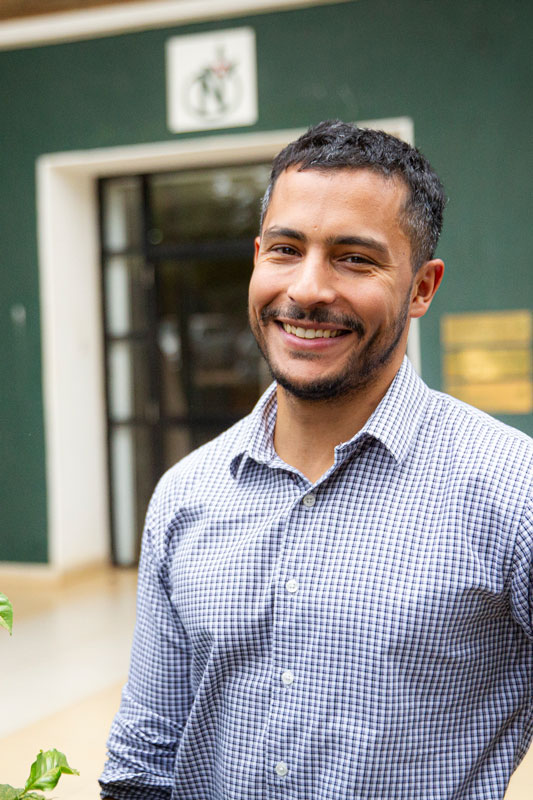
Jad Belmezouar

CURRENT ROLE AT NKG
Coffee Trader, NKG East Africa

DATE OF FIRST DAY AT NKG
May 1, 2025

A FACT PEOPLE MIGHT NOT KNOW ABOUT YOU?
Something people are often surprised to learn about me is that I lived for two years in Western Uganda, running washing stations in the middle of the bush—one of the most remote yet beautiful places I’ve ever been.

WHAT DO YOU ENJOY MOST ABOUT WORKING WITH YOUR TEAM?
The constant flow of challenges—it really pushes me to grow every day. I also love the cultural environment and the genuine kindness of my colleagues. And of course, our questionably unique sense of humor.

Looking
Ahead

Do you think the auction system will change in the future? Are there trends or developments that could influence how auctions are run?

Good question. Yes — I do think the auction system is likely to change in some significant ways, and there are several clear trends and developments that could shape how coffee auctions work in the future:

  • The Kenyan government is pushing to open its auctions to international buyers through a fully online platform, which would allow global players to bid remotely.
    This could democratize access, increase competition, and potentially push prices higher, benefiting the farmers.

Why do you think it’s important for others in the group to understand how these auctions work?

There’s far more to a successful auction than what happens on the screen for a day. A huge amount of work goes on beforehand—sampling, cupping, cataloguing and logistics—and the way we prepare directly determines the quality of lots that reach buyers. During the auction itself, active engagement matters: careful attention and quick decisions help us avoid poor selections and reduce quality risk. By the time the auction wraps up, I’m completely drained and I usually don’t do much on Tuesday evenings 😊

Auctions also create opportunities. Because many different lots and qualities appear together, we can build a wide, thoughtful range of offers that meet varied buyer needs

My hope is that colleagues walk away with an understanding of how fully committed we are to this process—both before and during the auction—and how that commitment helps us secure the right coffees for the right buyers while avoiding any quality issues.

One Response

  1. Grand-mère te félicite pour ton travail, elle est très fière de son petit fils 😊, moi pareil je suis super fière de mon fils ! 🤗

Leave a Reply

Your email address will not be published. Required fields are marked *

Further Articles

On A Field Trip with Anna Fath: Supporting Coffee Where It Grows

When we speak about Farmcare Practices in Peru, it’s not an abstract concept. For Coinca, it translates into the daily work of our CEE Department – a dedicated team of seven agronomists and field technicians who accompany producers throughout the year. Their mission is simple but far-reaching: to strengthen farms, improve resilience, and secure consistent, high-quality coffee production within our NKG Verified supply chains.
Read More »

Virtual Tour: NKG Fazenda da Lagoa

Located in Santo Antônio do Amparo, Minas Gerais, in the heart of Brazil’s coffee production region, the history of Fazenda da Lagoa (NKG Fazendas Brasileiras) dates back to Colonial Brazil, when the Portuguese settler Manoel Ferreira Carneiro received these lands in 1764 for sugarcane cultivation and cattle raising. In 1860, the first coffee tree in the Campos das Vertentes region was planted at Fazenda da Lagoa, and in 2003, the property joined the Neumann Kaffee Gruppe, which is fully dedicated to sustainable coffee production.

Read More »

A personal message to Kaweri: More than just ‘the case’!

Since its establishment, NKG’s Kaweri Coffee Plantation in Uganda has frequently been in the spotlight of the international media, particularly in relation to allegations of land grabbing and forced eviction. This entrenched, one-sided and negative reporting does not do the farm justice in the slightest.

Read More »