
Behind the scenes

Virtual Tour:
NKG Fazenda da Lagoa

Behind the scenes

Virtual Tour:
NKG Fazenda da Lagoa

NAME
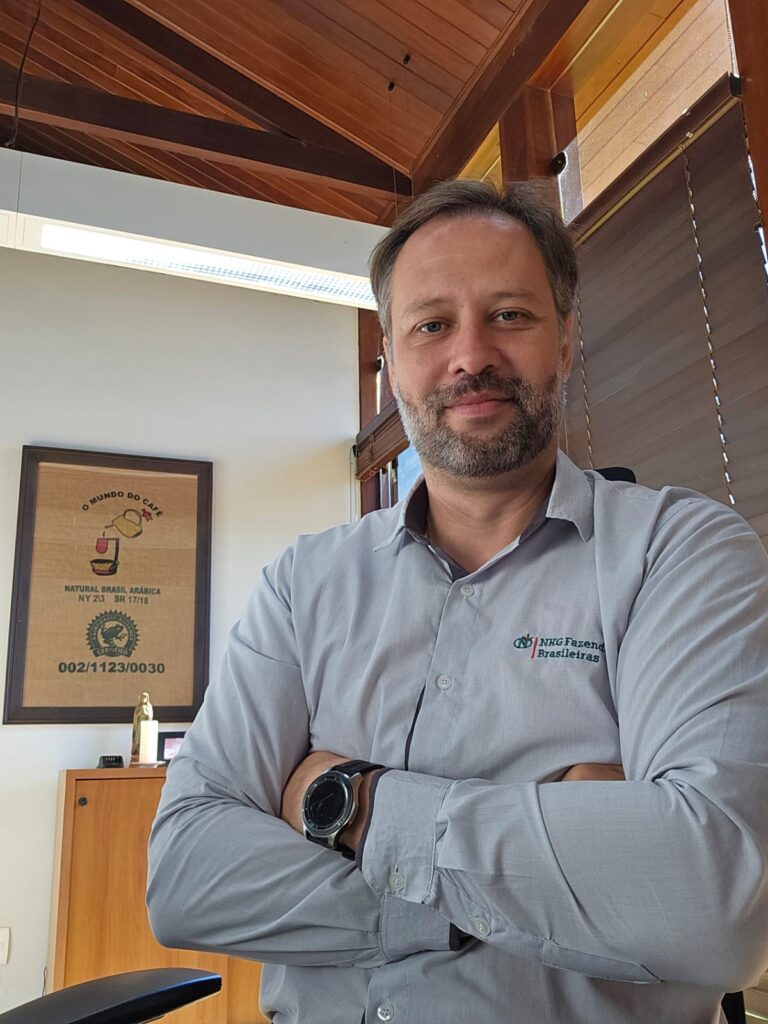
Patrik Avelar Lage

COMPANY
NKG Fazendas Brasileiras

DATE OF BIRTH
July 17

DATE OF FIRST DAY AT NKG
August 1, 2014

WHAT DO YOU LIKE BEST ABOUT WORKING AT NKG?
I have been working with coffee ever since I graduated in Agronomy, and it has always been a passion of mine. Being able to continue this professional journey in my hometown, and doing so within the largest coffee trading company in the world, is truly rewarding. What I appreciate most about working at NKG is the opportunity to connect my technical background with a global business environment, while still staying close to the community and region where my relationship with coffee began. Every day I feel motivated by the scale of the work, the impact we have on producers, and the chance to keep learning and growing within an industry I genuinely love.

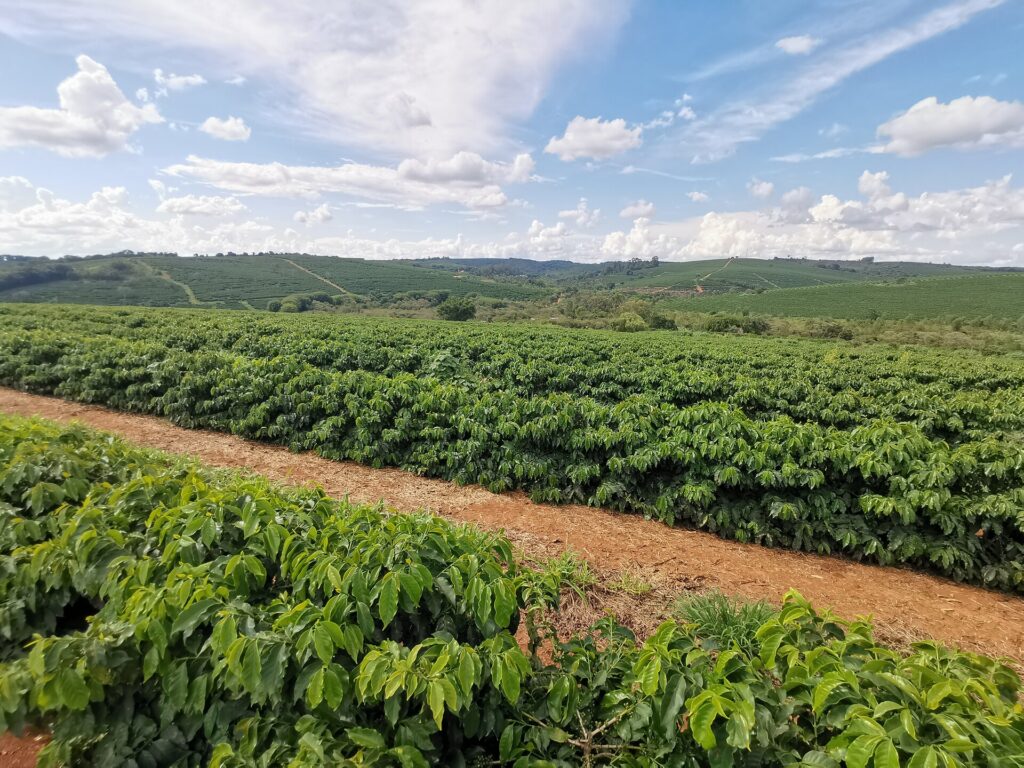
Located in Santo Antônio do Amparo, Minas Gerais, in the heart of Brazil’s coffee production region, the history of Fazenda da Lagoa (NKG Fazendas Brasileiras) dates back to Colonial Brazil, when the Portuguese settler Manoel Ferreira Carneiro received these lands in 1764 for sugarcane cultivation and cattle raising. In 1860, the first coffee tree in the Campos das Vertentes region was planted at Fazenda da Lagoa, and in 2003, the property joined the Neumann Kaffee Gruppe, which is fully dedicated to sustainable coffee production.

The farm combines traditional practices with modern technology to ensure responsible use of resources and care for the environment. Precision agriculture and the use of drones help monitor and optimize cultivation, while coffee processing residues are composted and returned to the soil as organic fertilizer. Both manual and mechanized harvesting methods are employed to maintain quality and efficiency. Regular pruning of coffee trees supports healthy growth, and drip irrigation used in 16% of the farm area ensures water is used responsibly. The farm operates entirely on renewable energy, powered by 1,320 solar panels, reinforcing its commitment to a sustainable future.

Environmental Conservation: Preservation of the Cerrado and the Atlantic Forest

Certifications

The coffee production at Fazenda da Lagoa includes all the stages commonly found in Brazilian coffee farms, but the property stands out for adopting methods that demonstrate that sustainable coffee production is integrated into its daily routine. These practices also increase efficiency, productivity, and final cup quality.

Certifications ensuring environmental, social, and legal compliance with national and international standards: Rainforest Alliance, C.A.F.E. Practices, Regenagri, and NKG Verified.

Jumbo
Seedlings

In 2018, Fazenda da Lagoa adopted the use of mudão (jumbo) seedlings. This seedling type, which offers many advantages compared to conventional seedlings, is more drought-tolerant and requires fewer replantings. Grown in the farm’s own nursery, the seedlings develop over an eight-month period with excellent phytosanitary control. When transplanted to the field, they are more resistant, more vigorous, and have far more roots. This results in less replanting and greater ease in field management.

Safra Zero

For several years, Fazenda da Lagoa has adopted the Safra Zero system, which consists of “skeleton” pruning and topping of coffee trees. This prevents harvesting in years of low and costly yields. All the energy the plant absorbs—especially water—is directed toward the growth of new leaves and new branches, meaning vegetative development that will support a future high-yield crop. In addition to improving plant balance, the system reduces costs and saves labor.

Composting

Fazenda da Lagoa uses composting of coffee residues, transforming them into nutrient-rich organic fertilizer for use on the farm itself. This process improves soil quality, reduces the need for chemical fertilizers, and greatly benefits plant health. Composting at Fazenda da Lagoa is highly advantageous, as it aligns environmental sustainability with agricultural efficiency.

Irrigation

In 2024, part of Fazenda da Lagoa’s coffee fields began operating under drip irrigation. To support this system, the property has a reservoir with a capacity of 130 million liters of water. This method delivers water and nutrients directly to the plant’s root zone, providing long-term benefits such as irrigation uniformity, precise fertilizer application, and consequently, increased productivity and improved grain quality—an effective strategy for mitigating the impacts of water scarcity.

Fazenda da Lagoa is committed to producing sustainable, certified, traceable coffee with guaranteed food safety. To achieve this, it combines high productivity with respect for the environment, workers, and surrounding communities, as sustainability is one of its core pillars. The result could not be better: all these efforts are transformed into coffees of exceptional quality, enjoyed around the world.

Leave a Reply

Your email address will not be published. Required fields are marked *

Further Articles

A personal message to Kaweri: More than just ‘the case’!

Since its establishment, NKG’s Kaweri Coffee Plantation in Uganda has frequently been in the spotlight of the international media, particularly in relation to allegations of land grabbing and forced eviction. This entrenched, one-sided and negative reporting does not do the farm justice in the slightest.
Read More »

Mail from Group Comms: A personal Update

Dear MAG-readers,
Sometimes, when I’m sitting at my laptop in Hamburg, it seems to me as if I was quite far away from our product, especially the beginning of the coffee supply chain. Then, I remember that I’m only a phone call, email, or Teams message away from the farms and exporters. Every time I talk to colleagues who work in coffee cultivation or at our export companies, I feel that this is not that far. Although we live in different time zones and work in different realities, something common emerges from our exchanges. And here, where the coffee journey begins, is also where our new MAG series starts: From Farm to Shipment – Where Coffee Begins.

Read More »

Coffee Facts in a Nutshell

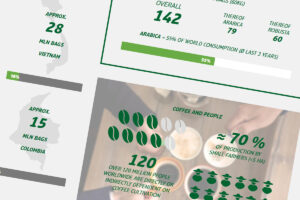
Global coffee production reached 173 million bags in 2024/25, with Brazil, Vietnam, and Colombia leading the way. Around 70% is grown by smallholders, and over 120 million people depend on coffee farming. Climate change threatens up to half of current growing areas by 2050, making sustainability more crucial than ever.

Read More »